Artificial turf has evolved far beyond the “carpet on dirt” stereotype. Today’s premium systems combine engineered drainage, realistic blade shapes, UV stabilization, antimicrobial backing, and modern infills to deliver a safe, low-maintenance lawn that looks fresh year-round. This guide walks you through what matters—how installation really works, how to maintain and clean synthetic grass (especially with kids and pets), when and how to do repairs, and how to select the right team and materials for long-term ROI.
What “a great turf system” actually means
A turf project is more than the green layer you see. The performance you feel underfoot and the durability you rely on come from the full system:
-
Sub-base & compaction: A stable, free-draining layer (often 3–4 in. of crushed stone or engineered base) compacted to ~95% Proctor.
-
Perimeter containment: Bender board, concrete, pavers, or hidden composite edging to lock the base and turf in place.
-
Weed & soil separation: Geotextile to stop soil migration and weeds while preserving drainage.
-
Turf selection: Pile height, density (stitches per meter), face weight, color blend, and fiber profile (C-shape, W-shape, etc.).
-
Seams & adhesives: Tape + polyurethane adhesive for structural seams; staples or nails for edge support (never to replace proper seaming).
-
Infill: Silica sand, coated sand, TPE, or zeolite for ballast, resilience, and heat/pet odor management.
-
Drainage geometry: Perforated backing and positive slope to get water off and away.
If you want a turnkey experience from a specialist team, contact our artificial turf installation company in South Florida.
Installation, step-by-step (what your crew should do)
1) Site survey & design
-
Confirm utilities, slopes, access paths, and water flow.
-
Choose blade height/density by use case (pets, putting green, play).
-
Outline perimeter details (mow strip, pavers, bender board).
2) Demolition & grading
-
Remove organics/old sod to 2–4 inches below finish grade.
-
Correct high/low spots; aim for a subtle crown or consistent fall (1–2% slope).
3) Base build & compaction
-
Install crushed stone or engineered base in lifts, moistening and compacting each layer.
-
Target even hardness and shape for surface smoothness and drainage.
-
Add a geotextile barrier over native soil if needed.
4) Edge restraint
-
Install composite/treated edge boards or integrate with paver/concrete edges.
-
Secure anchors on the “outside” of the turf line to avoid telegraphing.
5) Roll out & rest the turf
-
Unroll turf in the same blade direction; let it relax to reduce tension and wrinkles.
-
Rough-cut leaving 2–3 inches excess around borders.
6) Seams that disappear
-
Dry-fit pieces; trim factory edges to expose clean rows.
-
Use seam tape and adhesive; marry gauge lines without “mohawk” ridges.
-
Weight the seam during cure; avoid foot traffic.
7) Precision trimming & fastening
-
Tuck edges under restraints for a clean, natural look.
-
Use landscaping nails/staples periodically around the perimeter (not as a seam substitute).
8) Infill & power broom
-
Apply infill in light passes; broom between lifts to distribute to the base of fibers.
-
Final power broom stands blades upright and evens color/texture.
9) Final QA
-
Flood test or hose check select spots for drainage.
-
Walk the project for levelness, trip edges, seam invisibility, and fiber lay.
Planning a project soon? Our crew handles everything from boutique courtyards to family backyards—see Turf installation in Palm Beach for examples of spec-level work.
Choosing the right turf product (without the guesswork)
Match the fiber to the function
-
Play & multi-use lawns: 1.5–1.75″ pile, high stitch density, durable W or C fibers.
-
Pet-heavy homes: Perforated backing, antimicrobial options, odor-control infill (zeolite or coated sands).
-
Putting greens: 0.5–1.0″ texturized fibers; add separate fringe for realism.
Look for construction details
-
Face weight: Higher face weight often correlates with fullness and longevity.
-
Stitch rate & gauge: The “weave” that helps prevent matting.
-
UV & heat stability: Reputable resins and additives prevent fading and brittleness.
-
Warranty clarity: Understand coverage for UV fade, manufacturing defects, and installation workmanship.
Everyday care & cleaning schedule
Weekly/bi-weekly basics
-
Rinse dust/pollen; more often under trees or after wind events.
-
Brush high-traffic lanes with a stiff (not metal) broom to lift fibers and re-distribute infill.
-
Spot clean food/drink with mild soap + water. Avoid solvents unless your installer approves.
Monthly
-
Inspect seams, edges, and transitions.
-
Top up infill where fibers lean or mat.
Quarterly/Seasonal
-
Leaf blow/collect organics before they break down.
-
Deep brush and deodorize pet zones.
-
Check drainage paths and downspout splash areas.
If you prefer pro maintenance (especially for homes with multiple dogs), our partner company provides specialized services like enzyme protocols and machine brushing—book turf cleaning South Florida, turf cleaning in Boca Raton, or turf cleaning in West Palm Beach.
Pet care & odor control (what actually works)
-
Rinse frequently in pet hotspots to keep urea salts diluted.
-
Use enzyme cleaners that digest odor-causing compounds rather than masking them.
-
Choose the right infill: Zeolite or coated sands help buffer ammonia odors; avoid rubber in pet-centric lawns.
-
Encourage quick drainage: Keep slopes unobstructed; blow debris off regularly.
-
Sunlight & airflow help naturally sanitize and dry the surface.
Repairs you can DIY—and when to call a pro
DIY-friendly fixes
-
Stray tuft or edge lift: Re-adhere with a small amount of exterior-grade turf adhesive; weight until cured.
-
Minor melt or burn (grill/spark): Feather-trim and patch with matching off-cut + seam tape underlay.
-
Infill dips: Add matching infill and power broom.
Call a pro
-
Separated seams or rippling wider than a few inches.
-
Chronic drainage issues (ponding, foul odor).
-
Large patches or visible color mismatch.
-
Trip-edge corrections at paver or concrete interfaces.
If your yard includes shaded zones, pool surrounds, or play equipment, ask us about fiber blends and pad systems that reduce fall impact and surface heat.
Cost, lifespan & ROI (the quick math)
-
Upfront costs vary with access, demo, edging, base depth, and turf quality.
-
Operating costs are modest: water for rinsing, periodic infill top-ups, and occasional enzyme cleaner.
-
Savings come from reduced irrigation, fertilizer, mowing, and lawn care services.
-
Lifespan of high-quality installs commonly runs 12–20 years depending on usage and climate.
-
Resale appeal increases with low-maintenance landscapes that show well year-round.
Mistakes to avoid (learn from the field)
-
Skipping proper base compaction – leads to waves and dips.
-
Relying on nails for seams – seams need tape + adhesive for structural integrity.
-
Under-infilling – causes matting and visible backing.
-
Ignoring drainage slope – standing water shortens lifespan and invites odor.
-
Using harsh chemicals – solvents and chlorine can damage fibers.
-
No edge restraint – turf creeps, and borders look unfinished.
-
Choosing on color alone – check density, yarn type, and heat/UV specification.
How to choose your installer (a quick checklist)
-
Portfolio & references: Look for similar projects to yours (pets, pools, putting).
-
Material transparency: Ask for face weight, stitch rate, fiber type, and backing specs.
-
Base methodology: Which aggregate, depth, and compaction targets?
-
Warranty in writing: Manufacturer + workmanship, with clear term lengths.
-
Local compliance: HOA and property guidelines, utility locates, and drainage codes.
-
Aftercare plan: Maintenance options and repair response times.
Want to compare designs and options quickly? Explore our localized expertise here:
-
Regional knowledge for artificial grass in Broward
-
Design ideas for artificial grass in Delray Beach
-
Family-friendly lawns with artificial grass in Boca Raton
-
Coastal performance with artificial grass in Jupiter, FL
-
Estate-level installs on Jupiter Island artificial grass
-
Parks & play upgrades with artificial grass in Parkland
Quick design tips for special areas
-
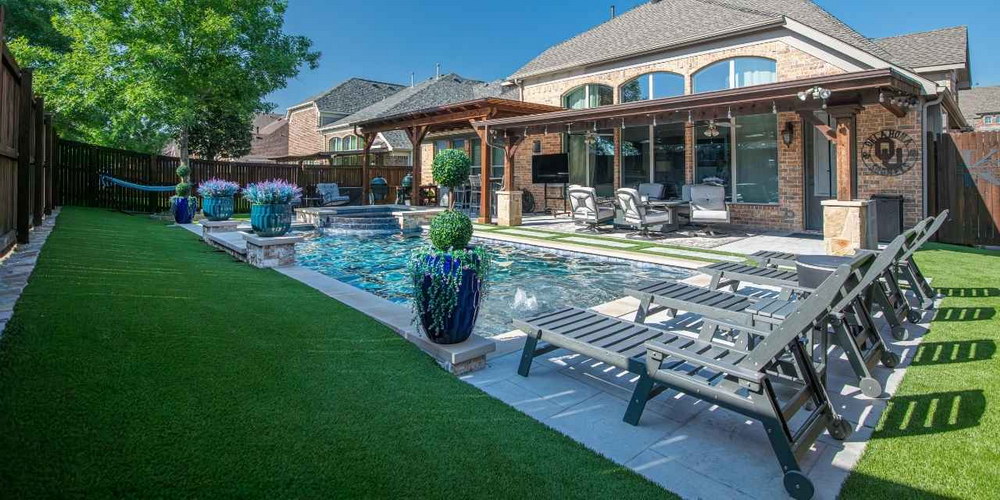
Pools: Choose lighter infill to reduce heat and limit tracking into water. Consider a narrow paver border at the waterline.
-
Shaded zones: Blends with texturized thatch fibers stand better in low light and traffic.
-
Play areas: Add a shock pad system and confirm fall-height ratings.
-
Putting greens: Separate base prep (fine stone), texturized green, and a distinct fringe profile for realism.
-
Side yards & dog runs: Maximize slope and opt for high-flow backing + odor-control infill.
Ready to plan your project?
From small courtyards to multi-use family lawns, Blue Ocean Turf handles design, materials, and precision installation. Start with a quick consult through our artificial turf installation company in South Florida page or browse styles and options showcased on turf installation in Palm Beach.
FAQs (5)
1) How long does artificial turf last?
High-quality turf installed over a well-compacted base typically lasts 12–20 years, depending on traffic, sun exposure, and maintenance.
2) Is synthetic grass safe for kids and pets?
Yes. Modern fibers are lead-safe and engineered for UV stability. For pets, pair a perforated backing with odor-control infill and regular rinsing/enzyme cleaning.
3) Will turf get too hot?
Turf can feel warmer than natural grass in direct sun. Choose lighter infills, specify heat-reflective yarns where available, add shade, and rinse before barefoot play on very hot days.
4) How do I clean up after pets?
Remove solids, rinse the area, and spray an enzyme cleaner to break down odor-causing compounds. For a deeper refresh, schedule pro maintenance via turf cleaning South Florida.
5) What maintenance does turf actually need?
Periodic rinsing, brushing high-traffic areas, leaf/seed removal, and occasional infill top-ups. Annual or semi-annual pro service keeps fibers upright and odors in check.