Why “HOA-Ready Turf Projects” Matter
Homeowners’ Associations (HOAs) are increasingly open to high‑quality synthetic grass—but approval hinges on meeting specific rules. “HOA‑Ready Turf Projects” means your design, materials, and documentation are packaged to pass the Architectural Review Board (ARB) on the first try and to perform flawlessly after installation.
This guide walks you through the three pillars of approval: (1) permits vs. HOA submittals, (2) design standards and product specs, and (3) an ongoing maintenance checklist that keeps your turf beautiful and compliant year after year.
Permits vs. HOA Approval: What’s the Difference?
City/County Permits: Local building authorities may require permits for drainage upgrades, major grading, or structural elements (e.g., retaining walls). Many turf projects don’t need a full building permit, but stormwater rules still apply. When in doubt, verify with your municipality or consult our team.
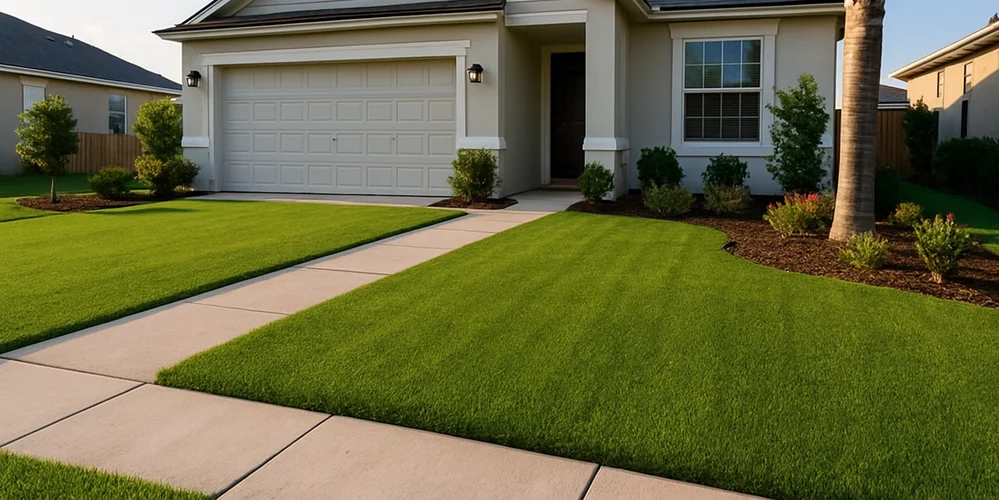
HOA/ARB Approval: Separate from permits. The HOA reviews your aesthetic compliance: front‑yard allowance, color, pile height, edging style, landscape integration, setbacks, visibility from the street, and ongoing care. Most HOAs want: realistic turf appearance, neat edging, proper drainage, and a clear plan to avoid odor or matting.
Tip: Submit both aesthetic specs (color, pile height, face weight, edging) and performance specs (drainage rate, UV/heat data, infill type) with sample photos and a scaled site plan.
For a broader overview of best practices, see our guide on artificial grass in South Florida—useful if your HOA emphasizes drainage, heat management, or hurricane‑season durability.
Design Standards Most HOAs Expect (and How to Meet Them)
1) Realistic Appearance
- Color & thatch: Choose multi‑tone green blades with beige/brown thatch for realism. Avoid ultra‑neon hues.
- Pile height: 1.5″–2.0″ for lawns is a common sweet spot—lush yet easy to groom.
- Sheen control: Low‑gloss fibers reduce reflectivity; curled thatch adds depth.
2) Performance & Safety
- Drainage rate: Perforated backings with ≥ 30–60 inches/hour drainage help prevent ponding.
- Heat mitigation: Consider lighter infills, shade planning, and periodic rinsing; cooling infills are a plus for sun‑soaked areas.
- UV/lead testing: Use products tested for UV stability and compliant with lead‑free standards.
3) Subbase & Edging
- Subbase: Compacted, permeable base (e.g., graded road base + fines) at 2″–4″ depth depending on soil and loads.
- Edging: Bender board, paver soldiers, or concrete curbing keep edges crisp and deter lifting.
- Weed barrier: A high‑quality geotextile prevents intrusion without blocking drainage.
4) Landscape Integration
- Setbacks: Respect HOA setbacks from walkways/curbs.
- Transitions: Use rock, mulch, or plant bed borders to soften edges.
- Irrigation capping: Cap or re‑route sprinklers to protect the turf and reduce overspray stains.
5) Specialty Areas
- Pets: Prioritize antimicrobial infills and underlayments with high flow rates; plan a rinse station.
- Play: Add shock pads to meet fall‑height targets for playsets.
- Putting greens: Specify stimp speed, cup placement, and fringe height for use‑case clarity.
If your review board asks for regional examples, explore our artificial grass in Palm Beach resource for specification ideas, product styles, and coastal drainage considerations.
Submittal Packet: What to Include for a Fast HOA Approval
1) Cover Letter
- Project address, owner info, installer (Blue Ocean Turf), and a single‑paragraph description.
- Statement of HOA compliance referencing the CC&Rs (color, pile height, edging, etc.).
2) Scaled Site Plan
- Property outline, proposed turf areas, dimensions, slopes, and drainage arrows.
- Locations of edging, trees, pavers, and any play/pet zones.
3) Product Sheet & Samples
- Manufacturer/spec sheet with pile height, face weight, color, stitch rate, backing, drainage rate, UV testing.
- Photographs of similar installations.
4) Construction Details
- Subbase depth and compaction notes.
- Seaming method (adhesive/tape) and tuft direction plan.
- Edging type and anchoring details.
- Infill type/weight (e.g., rounded silica, TPE, cooling infill) and distribution plan.
5) Maintenance Plan
- Weekly brushing, debris removal, seasonal decompaction, pet‑odor protocol, weed barrier care.
- Vendor support for periodic professional deep cleaning and repairs.
HOA-Ready Turf Projects: Drainage & Stormwater 101
Drainage is a top ARB concern. Your submittal should demonstrate:
- Permeable base that moves water vertically and laterally.
- Positive surface flow away from foundations and toward safe discharge points.
- Edge weep paths so water doesn’t dam at borders.
- Tree root respect; consider root‑friendly edging near mature trees.
Pro move: Photograph or map existing puddle zones after a rain event and show how your base design eliminates them.
Pet, Play & Odor Control (and When to Call in Pros)
A well‑maintained turf system stays HOA‑compliant. For multi‑pet homes or high‑traffic yards, periodic professional service keeps odors, compaction, and bacteria in check. If you need a specialized team, consider professional turf cleaning in South Florida by our partner brand, which also handles targeted repairs when needed.
For pet zones, specify:
- High‑flow backing (perforated or 100% permeable).
- Antimicrobial infill and routine enzyme treatments for urine.
- Rinse access and micro‑grading toward a discreet drain or gravel strip.
The Maintenance Checklist Your HOA Will Love
Keep your synthetic lawn crisp, clean, and HOA-compliant with this fast routine. The bullets below focus on fiber health, drainage, and curb appeal so inspections—and neighbors—stay happy.
Weekly
-
Blow off leaves, pollen, and dust (low-speed blower).
-
Quick brush in traffic lanes to stand fibers upright (stiff nylon broom; no metal bristles).
-
Rinse pet spots; apply enzyme where needed.
-
Fast edge & seam scan for any lift or trip hazards.
Monthly
-
Cross-brush sections to relieve compaction.
-
Top up infill where fibers look exposed (≈ ¼–½ lb/sq ft as needed).
-
Pull/treat weeds along borders; trim encroaching plants.
-
Check drains/weep gaps so water flows freely.
Quarterly
-
Deep rinse across the lawn; flush fines toward drainage paths.
-
Walk the yard after a rain; level minor low spots.
-
Rotate furniture/mats and re-brush flattened areas.
-
Refresh odor-control plan for pet zones (enzyme/antimicrobial).
Annually
-
Schedule a professional deep clean, decompaction, and seam/edge audit.
-
Uniform infill top-off if needed (≈ 1–2 lb/sq ft).
-
Inspect edging, nails, and borders; repair or re-secure.
-
Document maintenance with date-stamped photos for HOA records.
Post-storm add-on: Clear debris, hose off silt, check seams/edges, re-level any displaced infill, and lightly brush to prevent long-term matting.
Lifecycle, Warranty & ROI Talking Points for Your HOA
When boards hesitate, a concise value narrative helps:
- Water savings: Turf lawns dramatically cut irrigation demand compared to natural grass.
- Consistency: Year‑round curb appeal without scalping, brown patches, or muddy tracks.
- Durability: Modern fibers and backings resist UV, flattening, and pull‑out when groomed properly.
- Warranty clarity: Provide the manufacturer’s terms (UV fade, fiber integrity) and installer warranty (seams/edges workmanship).
- Sustainability options: Recycled or recyclable infills and turf systems; organic deodorizers.
City-by-City HOA Nuances? Start with Local Resources
Even when titles and brand standards are location‑neutral, your HOA’s rules can vary widely. If you’re researching local fit and style guides, explore these pages for examples and neighborhood‑friendly ideas:
- Broward artificial grass installers — good for denser neighborhoods where edging neatness matters.
- Delray Beach artificial grass — great for front‑yard realism and irrigation capping tips.
- Boca Raton artificial turf — insights on upscale aesthetics and HOA‑friendly transitions.
- Jupiter artificial grass — notes on coastal drainage and wind‑smart edging.
- Jupiter Island synthetic turf — premium fibers, low‑sheen looks, and fringe/putting combos.
- Parkland artificial grass — family yards, play safety, and pet‑odor management.
When Repairs Are Needed
Small issues can become HOA headaches if ignored. Address early:
- Seam lift after a storm? Re‑adhere before dirt migrates under the flap.
- Edge curl by driveways or walkways? Add secure pins or upgrade edging.
- Localized matting under furniture? Rotate pieces; brush and top up infill.
- Pet hotspots? Enzyme‑treat, then consider a higher‑flow underlayment.
If you need professional help after major weather or heavy use, schedule a service visit; West Palm homeowners often opt for turf cleaning in West Palm Beach to combine deep cleaning with minor repair touch‑ups.
Your HOA-Ready Submittal, Done for You
We can assemble the entire packet—site plan, product specs, drainage strategy, and maintenance plan—to streamline approvals. To start, request a compliant design review and we’ll tailor the submittal to your HOA’s CC&Rs.
FAQs (Up to 5)
1) Do all HOAs allow synthetic turf in the front yard?
Not all. Many now do—with strict standards on color realism, pile height, edging, and maintenance. Check your CC&Rs; if unclear, we’ll prepare a request with photos, samples, and detailed specs to maximize approval.
2) What pile height and face weight should I propose to my HOA?
For lawns, 1.5″–2.0″ with a realistic thatch is common. Pair it with a sufficient face weight and cooling/antimicrobial infill if pets or heat are concerns. We’ll match specs to use case and HOA preferences.
3) How do I prove my drainage plan is sufficient?
Include the turf’s lab‑tested drainage rate, a subbase section detail, slope arrows on the plan, and photos of current puddle zones. After storms, we recommend documenting performance with quick snapshots.
4) Will my turf get too hot in summer?
All surfaces warm up in direct sun. Mitigate with lighter or cooling infills, shade planning, periodic rinses, and fiber selections with lower sheen. We’ll note these strategies in your submittal.
5) How often do I need professional cleaning?
Most homes benefit from an annual deep clean and fiber decompaction; multi‑pet or heavy‑use yards may need quarterly service. Between services, brush, rinse, and enzyme‑treat as needed to keep HOA‑ready curb appeal.
Ready to Get Your HOA Approval?
Blue Ocean Turf specializes in design‑forward, HOA‑ready turf projects—from submittal packet to final brush‑out. If you want the shortest path to “approved,” we’re here to help.