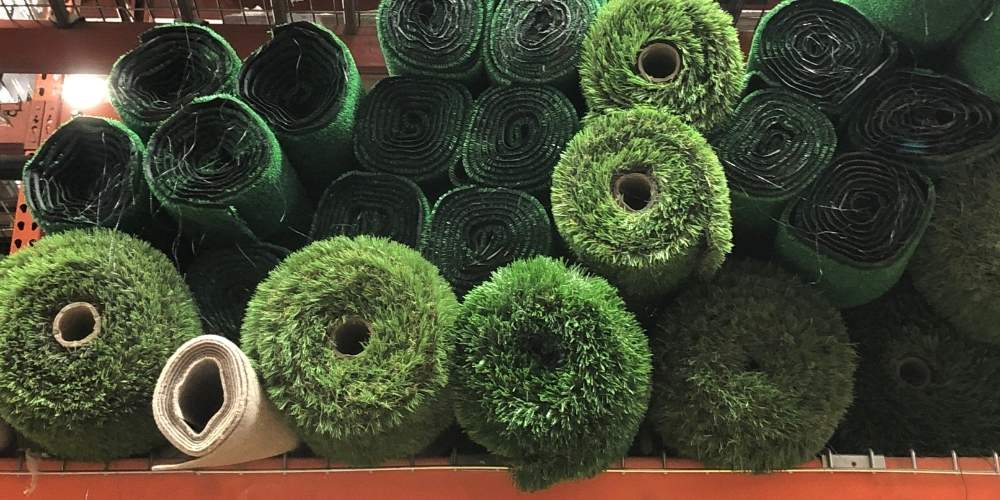
If you’re shopping for synthetic grass, the hardest part isn’t choosing the shade of green—it’s decoding the materials. This Guide to Artificial Turf Materials explains what fiber type (PE, PP, or nylon) actually does for performance, how pile height affects realism and maintenance, what infill you need (and why), and how backing construction controls drainage, durability, and lifespan. By the end, you’ll know exactly how to spec a lawn that looks great, feels soft, drains fast, and stays clean for years.
Quick note: If you’re comparing product lines and want a professional recommendation with samples and a written scope, check our overview of artificial grass installation in South Florida and then ask us for a one-on-one consult—we’ll map materials to your use case and budget.
1) Fiber Materials: PE vs. PP vs. Nylon
Turf “blades” are extruded from plastic resins. The three you’ll see most are polyethylene (PE), polypropylene (PP), and nylon (polyamide). Each behaves differently in heat, UV exposure, foot traffic, and water.
Polyethylene (PE)
-
Feel: Softest hand feel; closest to natural grass on bare feet.
-
Look: Natural sheen; pairs well with multi-tone green plus tan thatch.
-
Resilience: Good recovery from traffic when paired with the right infill; doesn’t get brittle.
-
Best for: Residential landscaping, play spaces, dog yards (with odor-control infill).
-
Watch for: Use adequate infill to prevent matting and support blade “memory.”
TL;DR: PE is the versatile, family-friendly default for most lawns.
Polypropylene (PP)
-
Feel/Look: Slightly stiffer; can appear “plastic” if pile is too short.
-
Resilience: Lower melting point and less UV stability than PE/nylon; more prone to flattening.
-
Best for: Putting green underlayment layers, thatch fibers, some budget applications.
-
Watch for: For primary fibers in hot, sunny sites, PP can underperform vs. PE/nylon.
TL;DR: Great for thatch and specialty uses, but not ideal as the main landscaping blade.
Nylon (Polyamide)
-
Feel/Look: Very springy “memory”; firm underfoot.
-
Resilience: Highest heat tolerance and blade recovery; excels in high-traffic or golf surfaces.
-
Best for: Putting greens, rooftop installs (heat), commercial heavy-traffic zones.
-
Watch for: Higher cost; can feel stiff for barefoot areas if pile/infill isn’t tuned.
TL;DR: The durability champ when you need pro-level resilience.
Pro pairing: A popular, high-performance recipe is PE primary blades for softness + nylon thatch for resilience. You get the look/feel of PE with the bounce-back of nylon.
2) Pile Height: Realism vs. Maintenance
Pile height is the blade length measured from the backing to the tip. It’s the fastest way to dial in realism, sport play, or barefoot comfort.
-
1.0–1.25 in (25–32 mm)
-
Use: Putting green (nylon or short PE), decorative areas that must stay crisp.
-
Pros: Fast ball roll; minimal grooming.
-
Cons: Not a “lush” look for landscaping.
-
-
1.25–1.75 in (32–45 mm)
-
Use: All-purpose residential lawns, play areas, pet yards (our most common range).
-
Pros: Natural look with manageable maintenance.
-
Cons: Needs proper infill to avoid matting.
-
-
1.75–2.25 in (45–57 mm)
-
Use: “Showpiece” lawns; soft underfoot.
-
Pros: Lush, premium appearance.
-
Cons: Requires more infill and grooming to keep blades upright.
-
Tip: Taller isn’t always better. The sweet spot for most homeowners is ~1.5–1.75 in with a quality thatch and sand/zeolite infill. It looks natural and stays easier to clean.
3) Face Weight, Blade Shape & Color
Beyond height, these specs matter:
-
Face weight (oz/yd²): The fiber mass on the face (not including backing).
-
Good residential range: 50–80 oz/yd². Heavier often means denser, but must pair with strong backing and tuft bind.
-
-
Blade shapes: C-, S-, V-, W-shapes and flat profiles.
-
What it changes: Light reflection (gloss), resilience, and heat feel. W- and S-shapes often soften glare and improve recovery.
-
-
Color blends: Multi-tone greens with tan/brown thatch look most realistic.
-
Avoid: Single-tone “neon” greens; they photograph harshly and often reveal seams.
-
4) Infill: Stability, Cushion, Odor & Heat
Infill is brushed into the turf to weigh it down, support blades, improve drainage, and manage odor/heat. Your choice dramatically affects performance.
Common infill types
-
Washed silica sand
-
What it does: Adds ballast and supports blades; economical.
-
Best for: Most residential lawns.
-
Note: Combine with odor-control infill for dog yards.
-
-
Zeolite (clinoptilolite)
-
What it does: Natural mineral that absorbs ammonia; great for pet odor control.
-
Best for: Dog yards, kennels.
-
Pro tip: Use as a top-dress layer over sand for targeted odor control.
-
-
Coated sand (acrylic/ceramic)
-
What it does: Reduces heat absorption and static, and can add antimicrobial features.
-
Best for: Sunny areas or households sensitive to heat.
-
-
Cork/organic infills
-
What it does: Cooler feel, lighter weight, sustainable.
-
Consider: Can migrate or float; needs proper edging/maintenance.
-
-
Crumb rubber
-
What it does: Cushion for sports fields.
-
Avoid for yards: Retains heat/odor; not needed for landscaping.
-
How much infill?
Typical residential lawns use 1–2 lbs/ft² (varies by pile height and density). Putting greens are different; they use specialty sands to tune ball speed.
Pet households: Use a base of silica sand for stability and top-dress with zeolite in high-use zones. For ongoing odor care, schedule professional cleanings—here’s a reliable resource for turf cleaning in South Florida.
5) Backing & Drainage: The Hidden Engine
Backing construction holds tufted fibers in place and controls how water leaves the system.
Layers & materials
-
Primary backing: Usually woven polypropylene that holds tufts.
-
Secondary backing (coating): Polyurethane (PU) or latex that locks tufts in and adds dimensional stability.
PU vs. Latex
-
PU: Strong tuft bind, stable in heat/humidity, lower water absorption; premium choice for long life.
-
Latex: Cost-effective; acceptable in many installs, but can absorb more moisture over time.
Drainage designs
-
Perforated (hole-punch): Standard; holes every 4–6 inches.
-
Permeable/flow-through: Water moves through the entire backing (no holes); excellent for rooftops or pet areas with heavy rinsing.
-
Non-perforated: Specialty applications where drainage is managed elsewhere.
What to look for
-
Tuft bind: A higher tuft bind resists fiber pull-out (great for kids/pets).
-
UV stabilization: Backing and fibers should be UV-treated for long-term color fastness.
-
Seam strength: Pair quality backing with seam tape/glue rated for heat and moisture.
6) Base Prep: Where Lifespan Is Won or Lost
Even perfect materials fail if the base isn’t right.
-
Soil removal and grading: Establish a gentle slope away from structures.
-
Base material: 3–4 in of compacted crushed stone (or local equivalent) to create a stable, free-draining platform.
-
Geotextile fabric: Controls mixing of base and soil, improves stability.
-
Weed barrier: Use selectively; in some installs, drainage-friendly geotextile is preferred over impermeable barriers.
-
Edging: Keeps infill contained and prevents turf creep.
7) Matching Materials to How You’ll Use the Lawn
Every day family lawn
-
Fiber: PE (with nylon thatch optional)
-
Pile: ~1.5–1.75 in
-
Infill: Sand + optional zeolite in pet zones
-
Backing: PU or premium latex; perforated drainage
-
Why: Soft, natural, easy upkeep
Pet-first backyard
-
Fiber: PE primary
-
Pile: 1.25–1.5 in (easier to clean)
-
Infill: Sand base + zeolite top-dress; consider permeable backing
-
Why: Faster rinsing, reduced odor, simpler grooming
-
For periodic pro service, see turf cleaning in Boca Raton.
Putting green
-
Fiber: Nylon or short-pile PE
-
Pile: 0.75–1.25 in
-
Infill: Specialty sands to tune stimp speed
-
Backing: High tuft bind; precise base shaping
Rooftop or hot, sun-baked exposure
-
Fiber: Nylon or PE with heat-mitigation design
-
Infill: Coated sand for heat reduction
-
Backing: Permeable flow-through for fast drainage
8) Regional Buyer Notes & Local Resources
Even though this is a location-neutral guide, homeowners often want local examples and service details. If you’d like to dive deeper into neighborhood-specific considerations such as HOA norms, glare from nearby glass, or salt-air exposure, browse these resources once (no repeats):
-
See material and install FAQs on artificial grass Palm Beach.
-
Review coastal wind and edging tips in artificial grass Broward.
-
Explore small-lot designs and soft-scape pairings for artificial grass Delray Beach.
-
Compare curb-appeal blends for artificial grass Boca Raton.
-
Learn about play-safe layouts in artificial grass Jupiter, FL.
-
Look at premium waterfront installs on artificial grass Jupiter Island.
-
Get privacy-forward designs in artificial grass Parkland.
9) Care & Cleaning (So Your Lawn Stays Like New)
A great Guide to Artificial Turf Materials isn’t complete without maintenance:
-
Weekly: Light brooming or power-broom in traffic lanes; quick leaf blow.
-
Monthly: Check infill levels; top up in matted zones.
-
After storms: Rinse debris and organic matter to prevent odors.
-
Pet routine: Prompt solids removal + quick hose-down; zeolite refresh as needed.
For deeper odor control, enzyme treatments, and sanitation—especially after heavy pet use—schedule a professional cleaning. A trusted option: turf cleaning in West Palm Beach.
10) Repairs, Warranty & Lifespan Planning
-
Seams: If you ever see lifting or gapping, it’s a quick professional repair when addressed early.
-
High-wear arcs: Kids’ play routes and dog sprints can mat fibers; a targeted infill top-up plus brushing usually restores look/feel.
-
UV & fade: Choose UV-stabilized fibers and backings with documented testing.
-
Warranty: Read what’s covered (UV, tuft bind, workmanship). Good materials plus correct installation routinely deliver 15+ years of service in residential settings.
11) Your Shortlist: A Spec You Can Trust
If you’re building a shortlist, this all-purpose spec fits most family lawns:
-
Fiber: PE primary with multi-tone thatch; optional nylon thatch for resilience.
-
Pile: 1.5–1.75 in, face weight ~60–75 oz/yd², W- or S-shaped blades.
-
Infill: 1–2 lbs/ft² washed sand + zeolite in pet areas; consider coated sand for hot exposures.
-
Backing: PU secondary with perforated or permeable drainage; high tuft bind.
-
Base: 3–4 in compacted crushed stone, geotextile, secure edging.
-
Maintenance: Light weekly grooming + periodic pro cleaning for pet yards.
Ready to see samples and lock the spec to your space? Get in touch for a tailored proposal.
FAQs (5)
1) What’s the best fiber for a family with kids and pets?
PE is the best all-rounder for softness and realism. Add zeolite infill to manage odors and consider nylon thatch for extra resilience.
2) Does a taller pile last longer?
Not necessarily. Durability is more about face weight, backing quality, tuft bind, and proper infill. A 1.5–1.75 in pile is often the sweet spot for homes.
3) How do I keep turf cool in summer?
Choose blade shapes that reduce glare, consider coated sand infill, provide shade where possible, and rinse before play on very hot days.
4) Can I skip infill?
We don’t recommend it. Infill supports blades, adds ballast, and improves drainage/cleaning. Skipping it leads to matting and seam movement.
5) How often should a pet yard be professionally cleaned?
Light-use yards can go quarterly, while multi-dog households benefit from monthly or bi-monthly service—plus routine homeowner rinsing between visits.